New Construction Homes
Wanderluxe provides a turn key interior design service for home builders. From fully custom builds to teardown-and-rebuild projects, semi-custom homes, spec purchases mid-construction, and everything in between.
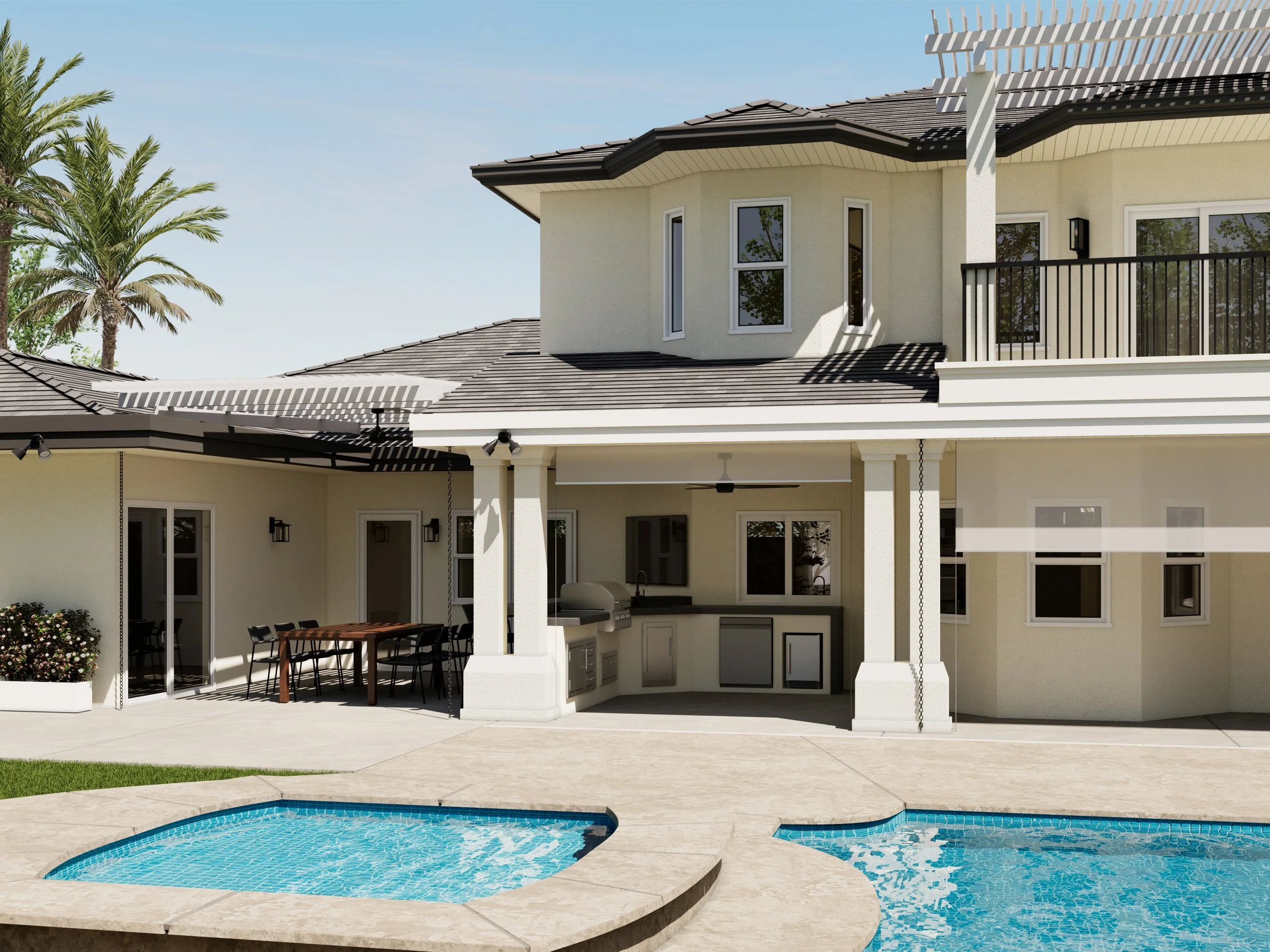
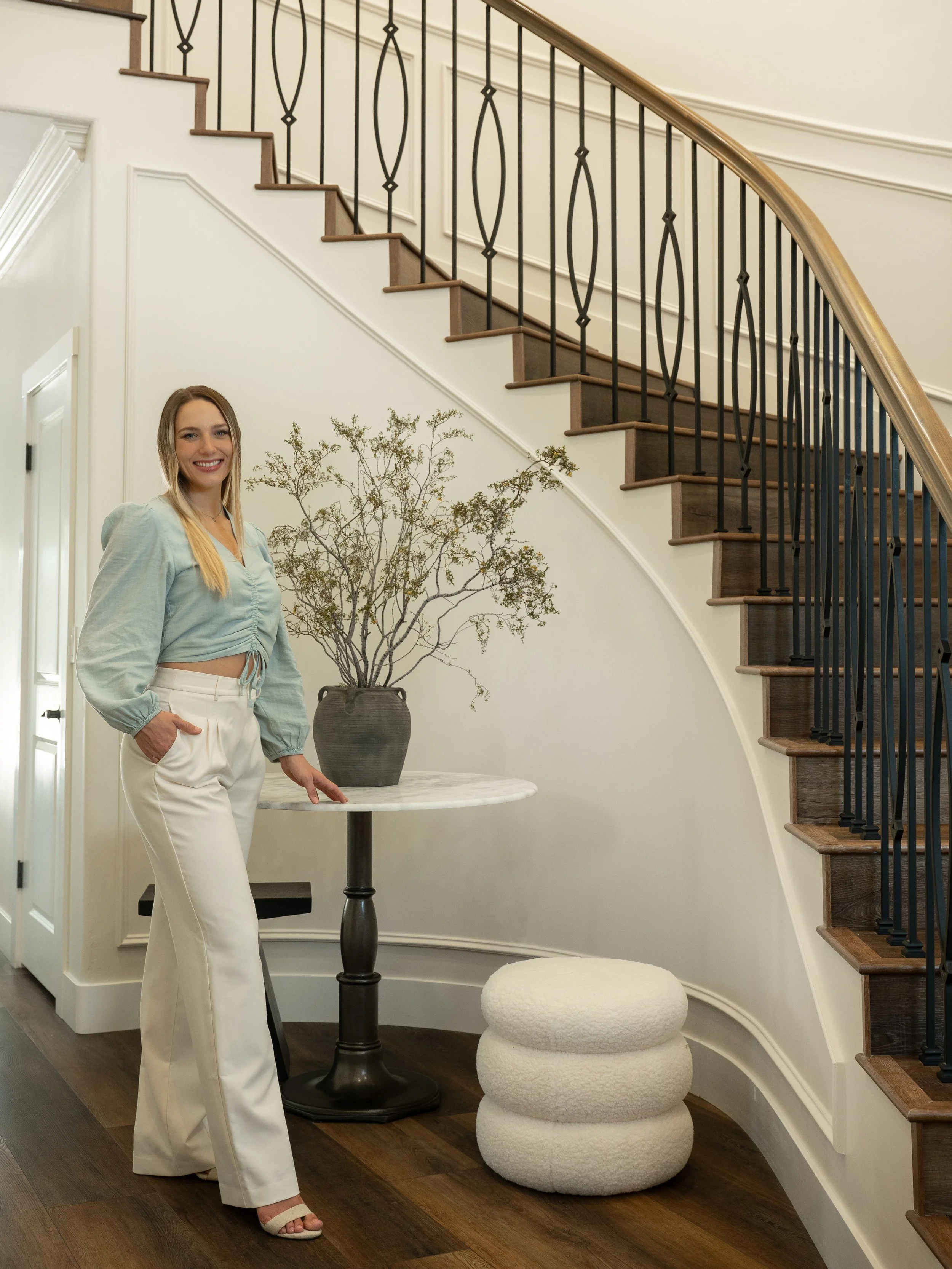
Wanderluxe Interiors is a Silicon Valley-based interior design studio working on new construction homes across the full spectrum from fully custom architect-led builds, semi-custom new homes, teardown-and-rebuild projects, and spec homes purchased at any stage of construction. The work is led by Jodi Deister, who lives in Los Gatos, and is organized around a single discipline: that interiors are best when they're integrated into the construction at the point where decisions are still inexpensive to make. The earlier the studio is involved, the more cohesive the result.
The new construction spectrum and where the studio fits
"New construction" covers more than fully custom. In Silicon Valley specifically, a client commissioning a new home may be working from any of five starting points: an architect-led fully custom build; a semi-custom build with a builder's framework and decision-point customization; a spec home purchased pre-foundation, mid-frame, or post-occupancy; a production or volume-builder home with curated selections; or a teardown-and-rebuild on an existing lot. This is common in Atherton, Palo Alto, and Los Gatos where the land carries more value than the structure. Each of those situations asks different things of an interior designer.
Wanderluxe is built to work across all five. The discipline travels: read the building's architectural logic, design the interior into the construction rather than onto it, coordinate selections with the builder's schedule and the architect's drawings, and treat the client's privacy as a brief input rather than an inconvenience. For projects that are fully custom and architect-led from programming forward, see also Custom Home Interiors the studio's deep-dive sibling service for that specific mode.
When the designer should be involved
The single most expensive decision a client makes on a new construction project is when to hire the interior designer. The architectural cost curve, documented in Patrick MacLeamy's well-known practice diagram, shows the ability to influence cost and performance is highest in programming and schematic design, and that the cost of changes rises sharply once construction documents are issued. The peer-reviewed construction-economics literature confirms it in dollars: Love and Li's 2000 study in Construction Management and Economics quantified design-change-driven rework on residential projects at roughly 3.15 percent of contract value, with Josephson and Hammarlund putting the broader rework range at 2 to 6 percent.
The practical version: the interior designer should be engaged six to twelve months before ground-break, and ideally during or before schematic design. The ASID Project Phases and Process framework — the canonical reference for residential and commercial interior practice — describes programming as "problem-seeking" rather than design-producing. That is the phase in which built-ins get planned into the architecture, lighting becomes part of the ceiling assembly rather than surface-mounted later, mechanical closets get placed where they don't compromise the floor plan, and seismic detailing for stone and millwork enters the structural drawings. Every one of those decisions is essentially free in programming and expensive once framing is complete.
How the studio runs a new construction project
The studio's four-phase client experience sits over the standard five technical phases of architectural practice. It runs the same way across the new-construction spectrum, scoped to the engagement model.
Dream it. A detailed understanding of how the family lives — daily routines, hosting patterns, the rooms that matter most, the relationship to outdoor space. For teardown-rebuild and fully custom projects, this happens before any architectural decision is finalized. For spec or semi-custom purchases, it happens as soon as the studio is engaged.
Feel it. Spatial direction, atmosphere, light, materiality. The studio works in close coordination with the architect on plan-level decisions — Christopher Alexander's A Pattern Language describes how an "intimacy gradient" of rooms is the single most consequential architectural decision for how a family actually lives in a house, and that gradient is read here.
Design it. Materials, finishes, tile, paint, lighting, kitchen and bath, custom millwork, FF&E. Specifications are issued with builder schedules and lead times in mind from the first day.
Build it. Construction documents, integration with the architect's drawing set, attendance at the appropriate OAC (owner-architect-contractor) meetings, milestone site visits at framing, MEP rough-in, drywall pre-cover, millwork install, finish install, and punch. Jodi leads each phase personally.
What's included
Architectural interior detailing and custom millwork specifications
Space planning and circulation aligned with the architecture
Material, finish, tile, and paint selection coordinated with builder schedule and lead times
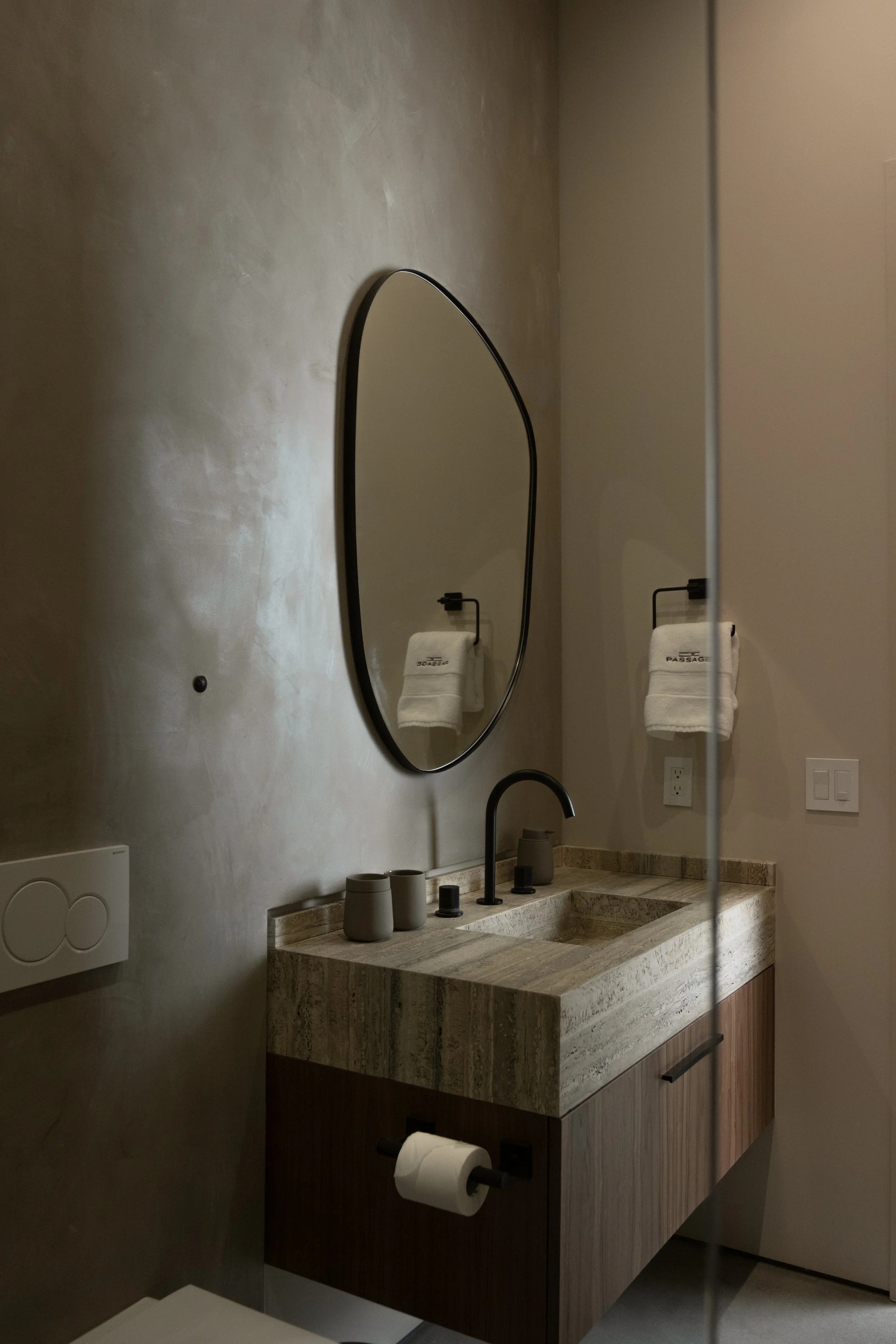
Kitchen and bathroom design
Lighting design direction integrated with architectural and electrical plans
Furniture procurement, styling, and installation
Coordination with your architect, builder, and trades throughout construction