Exterior Design
The architecturally driven design of outdoor rooms, outdoor kitchens, thresholds, hardscape, materiality, and exterior lighting, coordinated with the architect, the builder, and a licensed landscape architect.
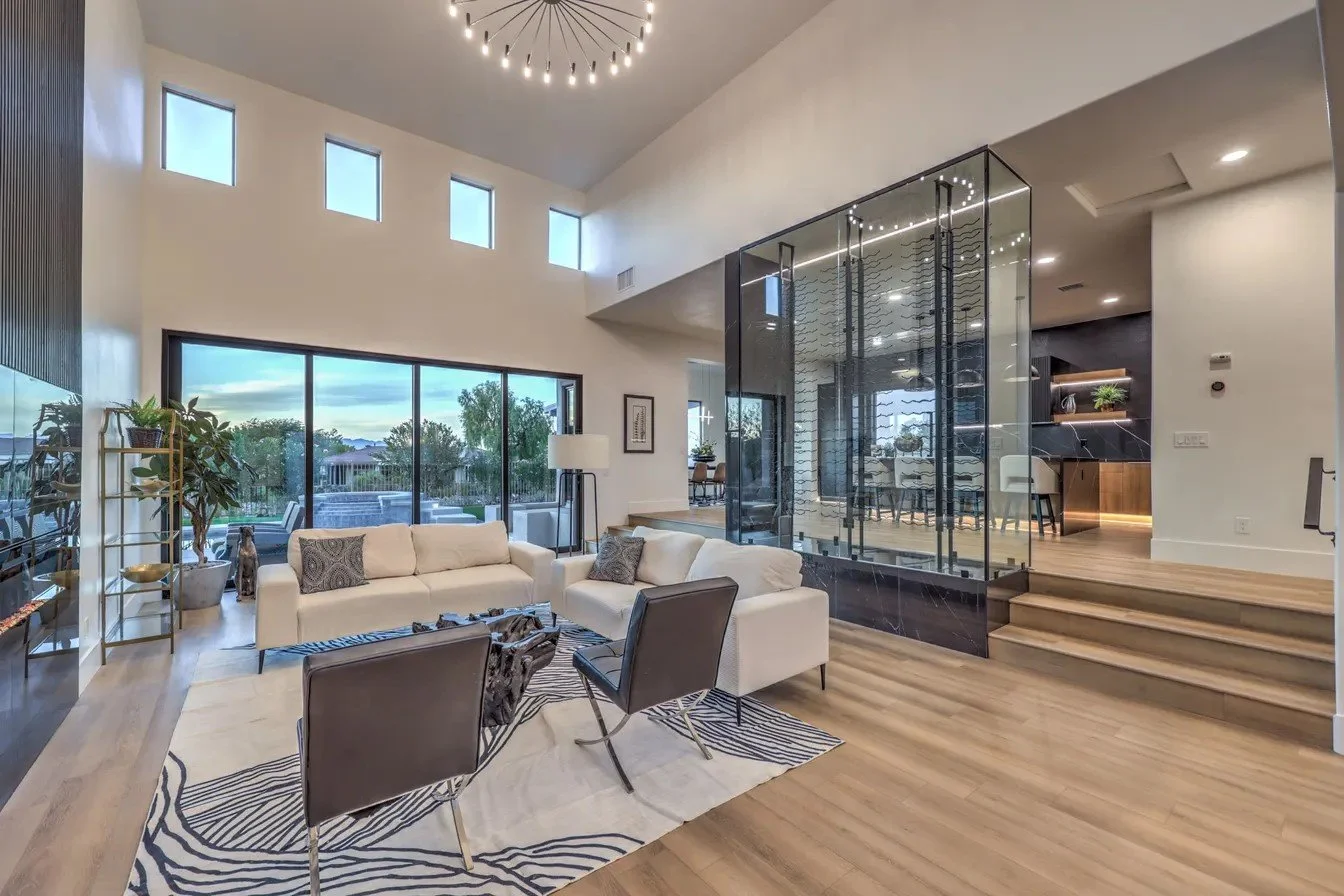
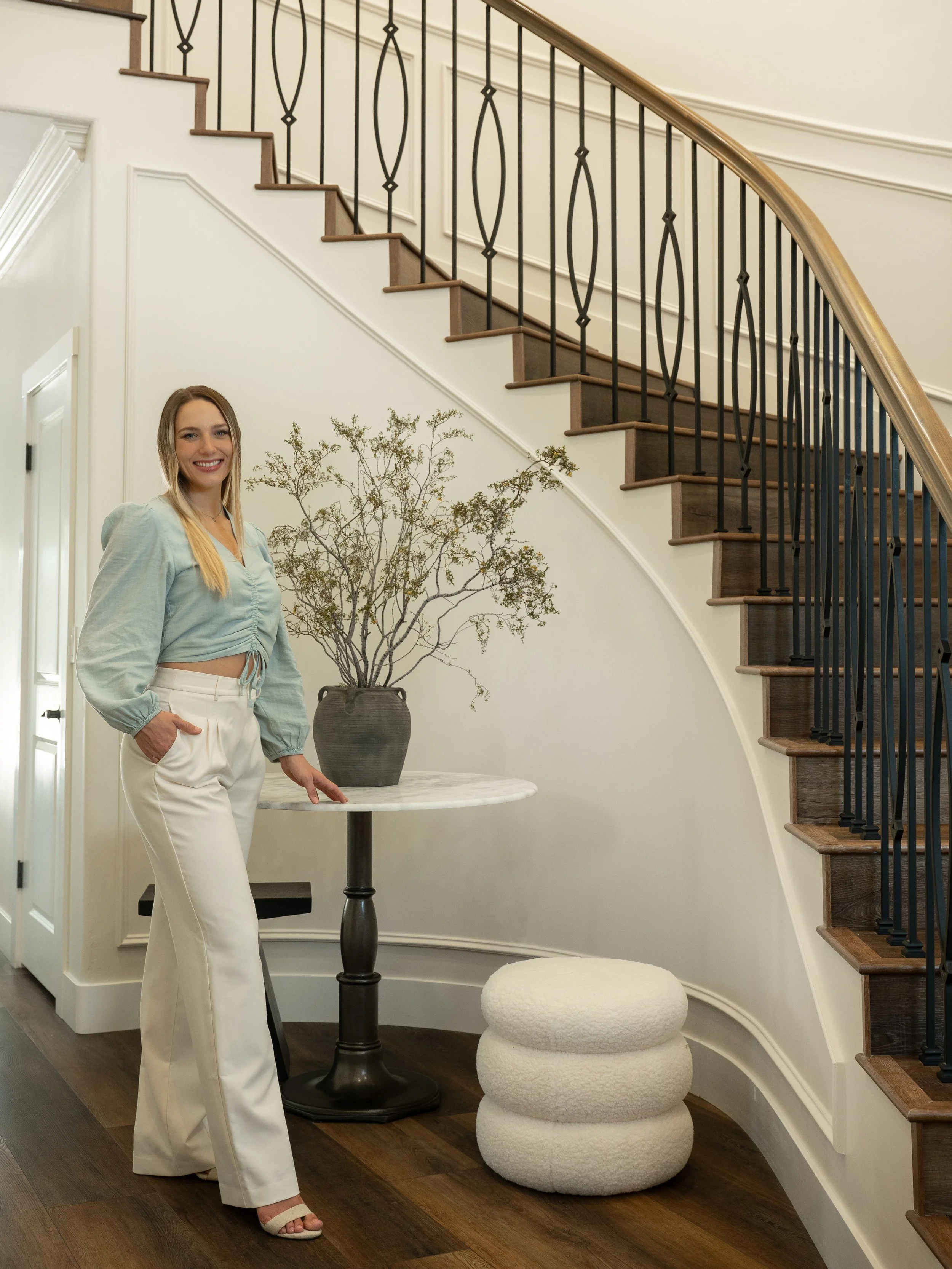
Wanderluxe Interiors is a Silicon Valley-based interior design studio offering exterior design for homes across the Peninsula: Los Gatos, Saratoga, Atherton, Palo Alto, Menlo Park, Hillsborough, Monte Sereno, and the broader Santa Clara County market. The work is led by Jodi Deister, who lives in Los Gatos. The studio's lane is the architectural and material side of everything outside the building envelope. Outdoor rooms, outdoor kitchens, the threshold between inside and outside, hardscape, exterior materiality, exterior lighting, and the small architecture of pool houses and outbuildings. Planting, irrigation, and grading are licensed landscape architecture scope and the studio coordinates with licensed landscape architects on that work.
What exterior design means
Exterior design is not the same as landscaping. It is the architectural and material design of every outdoor space a homeowner moves through, sits in, cooks in, or sees from the inside. It overlaps with architecture at the threshold, with landscape architecture at the planting line, and with interior design at the material palette. Wanderluxe's defensible scope:
Outdoor rooms (covered patios, loggias, pavilions, ramada structures), designed with the same discipline as an interior room.
Outdoor kitchens, designed to the NKBA Outdoor Kitchen Design Guidelines.
Fire features and hearth design.
Pool surrounds and pool decks (the architectural envelope around the water, not the pool engineering).
Thresholds and indoor-outdoor flow.
Hardscape (terraces, paths, paving, steps), coordinated with the landscape architect.
Exterior materiality and color, coordinated to the interior palette so the house reads as one design.
Exterior architectural lighting designed to IES standards and California Title 24 controls.
Pool houses, outbuildings, pergolas, shade structures, fences, and gates as small architecture.
The Bay Area indoor-outdoor tradition
Silicon Valley's design context is unusual. The dissolution of the wall between living room and garden was a regional preoccupation a century before today's lift-and-slide systems made it inexpensive. William Wurster and the Bay Region school treated the boundary between living room and garden as a designed condition. Joseph Eichler's Peninsula tracts put the atrium, post-and-beam structure, and floor-to-ceiling glass into the housing stock at scale. Sea Ranch set the regional precedent for buildings that sit into landscape rather than on it. The Peninsula's Mediterranean climate (Köppen Csb) means indoor-outdoor design pays a return roughly nine months a year, not three.
Custom workrooms and the eight-step upholstery discipline
A bench-made custom upholstery piece is built in eight discrete steps: hardwood frame, eight-way hand-tied springs (or sinuous in lighter applications), webbing, cushioning (foam, down, or a blend), batting, muslin, fabric, and trim and finish. The eight steps are why custom upholstery runs 12 to 24+ weeks, why a chair built this way costs five times the catalog equivalent, and why it lasts five times as long. Hand-knot custom rugs typically run 16 to 32 weeks. Custom drapery runs 8 to 16 weeks. These lead times are the planning fact that drives the schedule conversation with every client at the first call.
Decorative lighting
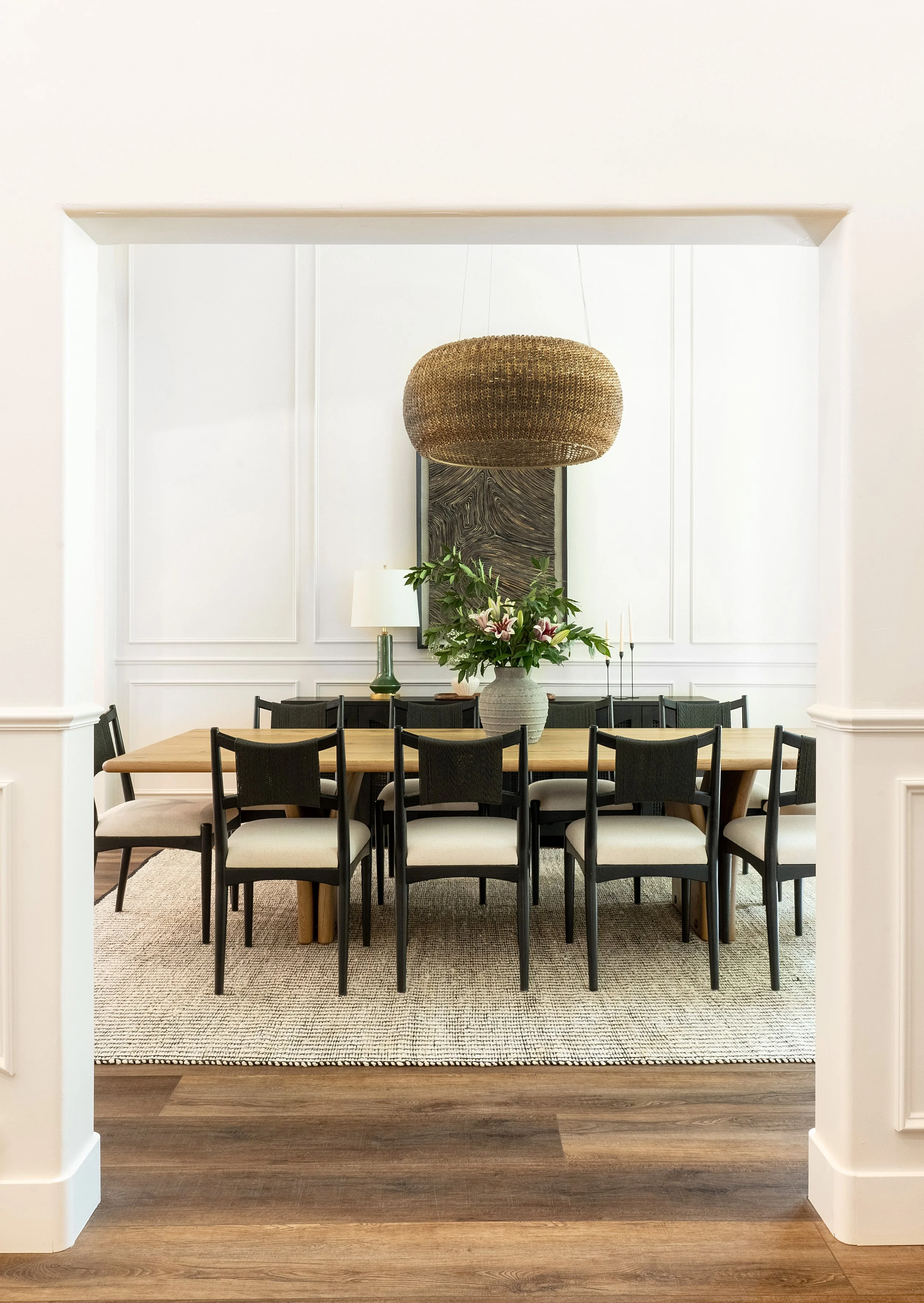
Decorative lighting (pendants, chandeliers, sconces, table and floor lamps) belongs to the FF&E scope and is specified, procured, and installed as part of this program. Architectural lighting (recessed, cove, integrated, exterior) is base building and is handled in the architectural service pages, where the lighting plan integrates with the electrical drawings at programming. The boundary matters because the workflows are different. California Title 24 Part 6 still applies to permanently installed luminaires, including hard-wired decorative pendants and sconces; the procurement workflow verifies JA8 compliance where required. Plug-in lamps are exempt.
Art curation and placement
Art is composition, not filler. The standalone art workflow runs across collection assessment, placement strategy, conservation framing (acid-free mats and backing, museum glass at the Tru Vue Museum or Optium tier for works of consequence), lighting specification (IES RP-30 standards put the working threshold at CRI greater than or equal to 90, with CRI greater than or equal to 95 preferred for color-critical placements), professional install (D-rings, French cleats, or museum hangers per weight and material), and insurance documentation. Acquisition advisory is in scope where the client wants it. Working with the existing collection is in scope by default. The studio's role is to read the collection, place each piece in conversation with the architecture and the furniture, and light it correctly.
Cost benchmarks and lead times
Working ranges for a high-end Peninsula whole-home furnishing program run $300,000 to $2,000,000+ depending on scope, custom share, and art allocation. Per-room working brackets at the high end: living room $50,000 to $300,000+; primary bedroom $30,000 to $150,000+; dining room $40,000 to $200,000+. Per unit: custom drapery $5,000 to $30,000+ per opening; custom upholstery $5,000 to $25,000+ per piece; custom hand-knot rugs $50 to $500+ per square foot; high-end decorative lighting $5,000 to $50,000+ per fixture. Art is highly variable; many considered Peninsula clients allocate 5 to 15 percent of the furnishing budget to art.
Lead times to plan against: custom upholstery 12 to 24+ weeks; custom drapery 8 to 16 weeks; hand-knot rugs 16 to 32 weeks; high-end European furniture 16 to 28 weeks; decorative lighting 8 to 16 weeks (16 to 24+ for custom). A whole-home furnishing program typically runs 6 to 12 months from contract to final styled install. Procurement fee structures most common at the high end are cost-plus markup on net trade (20 to 35 percent), or a flat design fee paired with a reduced markup. [VERIFY ranges at draft refresh against Business of Home State of the Industry and ASID Designer Outlook.]
Responsible procurement
A short list of standards the studio specifies against. CARB Phase 2 (California Air Resources Board, 17 CCR §93120) regulates formaldehyde emissions from particleboard, MDF, and hardwood plywood used in furniture sold in California; an internationally sourced piece must verify compliance. GREENGUARD Gold (UL Solutions) certifies low VOC emissions for furniture and finishes, a working standard for clients sensitive to indoor air quality. FSC (Forest Stewardship Council) verifies responsibly managed wood sourcing. California Proposition 65 disclosure is procurement reality, not a furniture-quality signal. FTC Textile Fiber Products Identification Act (16 CFR Part 303) requires fiber content disclosure on textile products. California TB 117-2013 allows upholstered furniture to meet flammability standards without chemical flame retardants; the studio specifies non-FR foams by default.
The philosophical anchor
Christopher Alexander's A Pattern Language (1977), Pattern 253, opens with a line worth quoting before any furnishing decision is made: "Decorate the rooms in your house with a deep need to put things there that are yours." The warning behind the line, that decoration imposed from outside by a designer imagining a client's taste drains a house of feeling, is the working principle of this service. The studio's role is not to impose. It is to gather what is genuinely yours, edit the rest carefully, and specify only what is needed to complete the room. Editing, not erasure. Material that ages in public. Composition, not filler. The longer argument lives in Considered Restraint, Explained.
What's included
Curation and selection across the seven FF&E categories. Trade-only sourcing through 1stDibs Trade, San Francisco Design Center, regional galleries, and auction houses. Custom furniture, soft goods, rug, and occasional lighting design and specification. Custom workroom coordination (drapery, upholstery, rugs, frames). Decorative lighting specification (Title 24-compliant for hard-wired)Art curation, framing, lighting, and installation. Antiques and vintage sourcing, condition assessment, and provenance review. Procurement management (purchase orders, deposits, freight, insurance)Receiving warehouse coordination and white-glove delivery. On-site install, styling, and reveal 90-day post-install adjustment period